
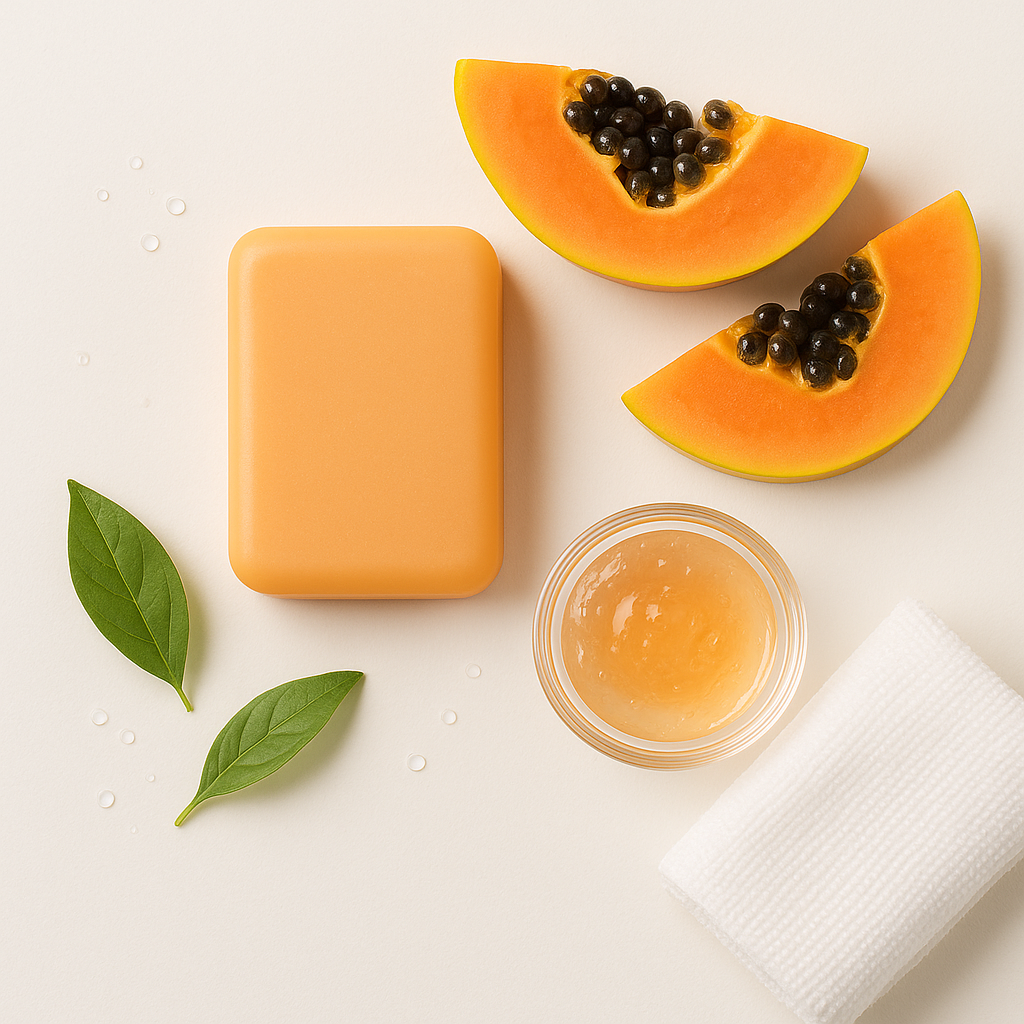
Papaya and fruit-enzyme bar soaps have become popular among skincare users who want to elevate the look of their skin with products that help support radiance and a smoother-feeling surface. These bars are made with natural enzymes—most commonly papain from papaya and bromelain from pineapple—which provide gentle exfoliation without the intensity of acids.
For many, the appeal lies in achieving a refreshed, brighter-looking finish through a cleanser that feels simple and familiar. Yet, because enzyme activity can vary in strength, understanding how to use these soaps correctly is essential for comfortable daily or weekly use.
This editorial guide explains how papaya and fruit-enzyme soaps work, how often to use them, and how to pair them with other skincare steps—all in a safe and effective way.
What Exactly Are Papaya & Fruit-Enzyme Soaps?
Papaya soaps are formulated with papain, an enzyme extracted from the fruit that helps break down dead surface cells. Some formulas blend papaya with pineapple enzymes, adding bromelain for additional exfoliating support.
These soaps typically serve two cosmetic objectives:
- Supporting the appearance of a smoother, more refined texture
- Helping the skin look more radiant and refreshed
Depending on the formulation, many bars also include hydrating ingredients like glycerin, coconut oil, or shea butter to keep the lather comfortable and non-stripping.
Are Papaya Enzyme Soaps for Face, Body, or Both?
Most commercially available papaya and fruit-enzyme soaps are marketed for both face and body, but the texture and enzyme concentration determine their ideal usage.
- Face: Works well when used several times weekly, especially for dull-looking or uneven-feeling texture. Patch testing is important because the face is more sensitive.
- Body: Suitable for daily or near-daily cleansing, particularly for areas that experience roughness or dryness.
If a product does not specify “facial use,” start with body application and slowly introduce it to the face—if desired—based on comfort.
How Often Should You Use Papaya Enzyme Soap?
Frequency depends on your skin type and the strength of the formulation.
Face:
- 2–4 times weekly for most users
- Once weekly for beginners or those with sensitivity
- Avoid using alongside strong exfoliants on the same day
Body:
- 3–7 times weekly depending on comfort
- Can be used daily if the formula includes hydrating agents
The goal is to allow enzymes to support surface renewal without overwhelming the skin barrier.
How to Use Papaya & Fruit-Enzyme Soap Step-by-Step
1. Begin With Damp Skin
Wet your face or body with lukewarm, not hot, water. Heat can increase dryness.
2. Lather the Soap in Your Hands First
Creating a light foam before applying helps ensure gentle and even distribution.
3. Apply to Skin Using Light, Upward Motions
For the face: keep the contact time short—15 to 45 seconds is usually enough.
For the body: up to 1–2 minutes is acceptable for most users.
4. Rinse Thoroughly
Make sure no residue remains. Enzymes continue working on the surface if not rinsed fully.
5. Follow With Moisturizer
Enzyme cleansing pairs best with a hydrating lotion or cream to support a balanced, comfortable feel.
6. Use Sunscreen During the Day
Any form of exfoliation—chemical, enzyme, or physical—calls for sun protection to maintain skin comfort and appearance.
How Papaya Soap Fits Into a Skincare Routine
Below are sample routines depending on time of day and products you already use.
Morning Routine (Face or Body)
- Papaya enzyme soap (2–4x weekly)
- Hydrating toner or essence
- Vitamin C or antioxidant serum
- Lightweight moisturizer
- SPF 30 or higher
This pairing complements the soap’s ability to help the skin look more refreshed.
Evening Routine
- Makeup remover or oil cleanser
- Papaya enzyme soap
- Hydrating serum (hyaluronic acid or peptides)
- Moisturizer or nourishing cream
AM and PM routines can alternate based on comfort and sensitivity.
Can You Combine Papaya Soap With Other Active Products?
Yes—when used correctly. Here is what works best:
Pairs Well With:
- Vitamin C serums
- Hydrating toners
- Peptide serums
- Moisturizers with shea, glycerin, ceramides
Use With Caution:
- Retinol
- AHA/BHA acids
- Strong exfoliating pads
Avoid applying these on the same day until your skin adjusts to the enzyme cleansing routine.
Patch Testing: A Step Many Users Skip but Shouldn’t
To test safely:
- Apply the lather to a small area (jawline or inner forearm).
- Rinse after 60 seconds.
- Watch for dryness or redness over the next 24 hours.
If comfortable, gradually introduce it into your routine.
Frequently Asked Questions (FAQs)
1. Can papaya enzyme soap be used daily on the face?
Daily facial use is not recommended for most people. Start with 2–3 times weekly and adjust based on comfort.
2. Is papaya soap suitable for sensitive skin?
Yes, but frequency and contact time should be reduced. Patch testing is essential.
3. Does papaya soap work well with vitamin C serums?
Yes. Enzymes prepare the surface for serums that support brightness, making the pairing suitable for morning routines.
4. Can it be used on melanin-rich skin tones?
Papaya enzyme soaps are generally suitable for all skin tones when used as directed, as they support a smoother and more radiant-looking appearance without altering natural pigment.
5. Should I moisturize after using papaya soap?
Yes. Enzyme cleansing benefits from follow-up hydration to maintain comfort and balance.